From 28 to 30 September 2026, part of the Myukura team worked in Barcelona at the 8th MareNostrum Hackathon — MNHACK26, organised by the Barcelona Supercomputing Center together with NVIDIA, under the umbrella of Open Hackathons and with Do IT Now as sponsor.
The call had reached us through the NVIDIA Inception programme, of which Myukura is a member.
We were selected with a proposal focused on one of the technical problems that runs through our whole product: automatic recognition of clinical speech in Spanish.
Why clinical speech is a different problem
Turning speech into text seems today like an almost solved technology.
In controlled conditions, some modern systems deliver extraordinary results.
But a consultation is not a recording prepared for a benchmark.
There are interruptions, different distances from the microphone, fast pronunciation, proper names, medications, quantities, doses, acronyms and ways of speaking that change between regions and people.
And there is also a critical difference between getting an everyday word wrong and getting clinically relevant information wrong.
Not all errors have the same impact.
That is why, when we evaluate speech recognition for Myukura, we are not interested only in an overall figure.
We want to understand what it gets wrong, when it gets it wrong and which kind of information is hardest to recognise.
Spanish, terminology and accents
A significant part of the large speech datasets and the most widely used models have been developed with a strong presence of English.
Spanish has its own challenges.
And within Spanish there is also enormous variability between countries, regions and speakers.
For a company born in Andalusia, matters such as recognising different accents are not an academic consideration.
They are part of the real environment in which we expect this technology to be used.
On top of that comes clinical vocabulary: drugs, active ingredients, units, doses and terms that are rare in general conversation.
Our work during the hackathon focused precisely on making progress on these limitations.
What we did during the hackathon
The MareNostrum Hackathon format was not competitive.
The aim was for each team to be able to use high-performance computing infrastructure, work on its own problem and receive technical support from mentors.
During the sessions we trained and evaluated our own models, tried different configurations and analysed results to better understand how the models responded to our use case.
Access to high-performance GPU infrastructure allowed us to speed up part of the experimental work and, above all, to run comparisons that are hard to carry out with more limited resources.
But the most valuable part was not simply having more computing power.
It was being able to use it to ask better questions.
Measure before integrating
In AI-based products there is a frequent temptation: find a model with good public results and immediately start building on top of it.
Our experience is turning out to be the opposite.
Before integrating a model into a clinical architecture we need to understand its limits.
That means measuring.
Not only measuring overall accuracy, but examining error patterns, audio conditions, vocabulary, generalisation and computational requirements.
The hackathon let us move precisely in that direction.
MareNostrum 5 and the value of experimenting on real infrastructure
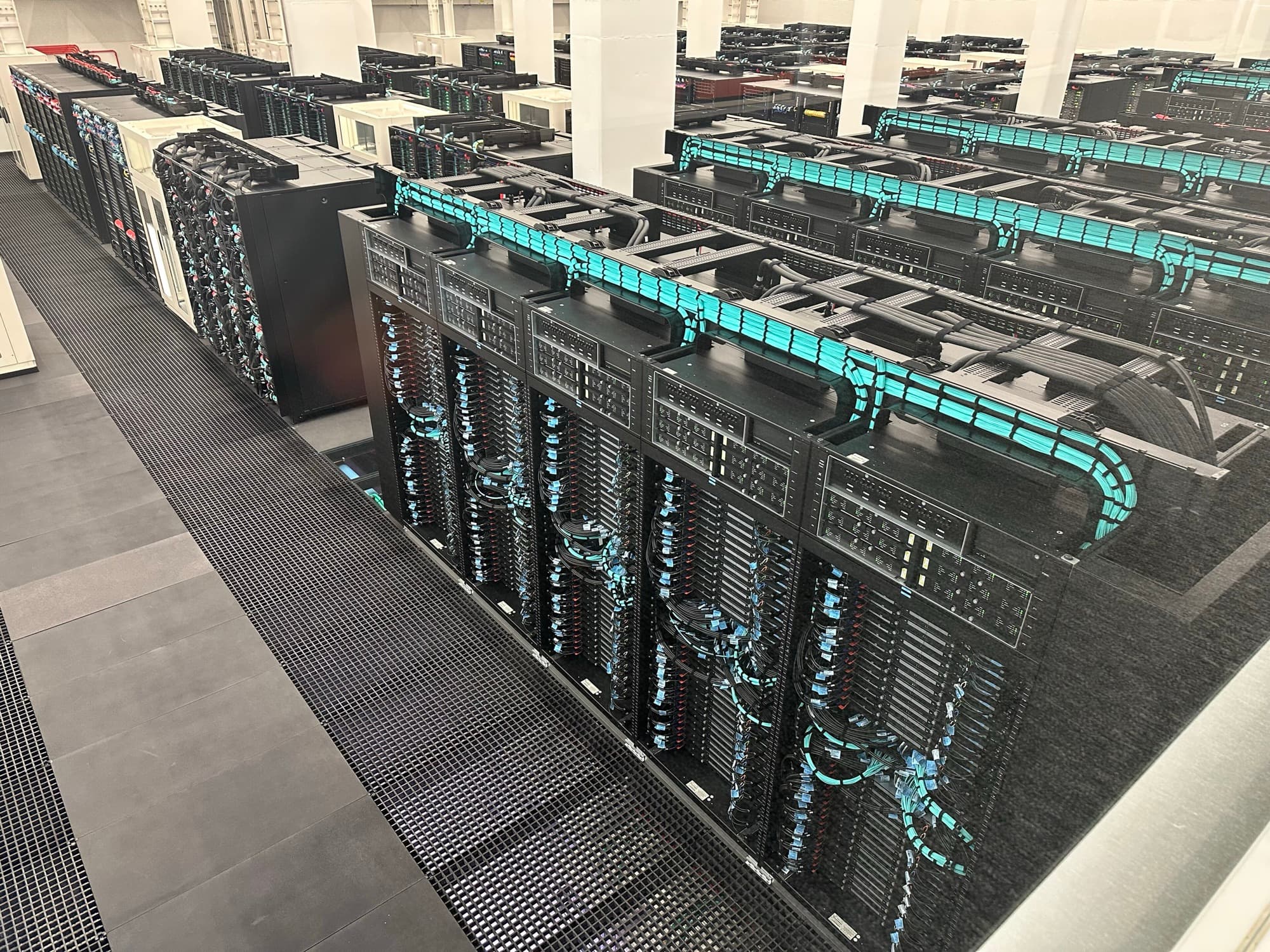
The Barcelona Supercomputing Center hosts MareNostrum 5, one of Europe’s major supercomputing systems.
Working in an environment like this makes it possible to investigate models and configurations that, because of their computing needs, would be much harder to explore on conventional infrastructure.
For a startup, having that context and the support of specialists for a few days is a rare opportunity.
It let us speed up experiments.
But also understand better which ones were worth continuing.
What continues after Barcelona
The hackathon does not close this line of work.
It opens it.
We come back with results, but also with a more precise picture of today’s limitations and of the next questions we need to answer.
We will keep working on clinical speech recognition in Spanish, model adaptation and evaluation of specialised systems within our R&D line.
Our goal is not to train models for the sake of training them.
The goal is to determine which architecture can deliver sufficiently consistent results to help document a consultation while always keeping the professional’s review.
Acknowledgements
We would like to thank the Barcelona Supercomputing Center for the opportunity to take part and work at its facilities; NVIDIA and the mentors who supported us technically during the sessions; NVIDIA Inception, through whose programme we learned of the call; Do IT Now for taking part as sponsor; and OpenACC and Open Hackathons for the organisational work and for creating an environment where companies, researchers and engineers can experiment on real problems.
Sources
Keep reading
- NVIDIA Inception and Myukura’s R&D line: specialised models and local artificial intelligenceTechnology · 5 October 2026
- Bigger doesn’t always mean better: the role of specialised models in clinical AIResearch · 5 October 2026
- NVIDIA Nemotron 3 Diarization: why correctly separating speakers matters in a medical consultationClinical AI · 5 October 2026